
The Fragile Architecture of Golden Age Stereoscopy
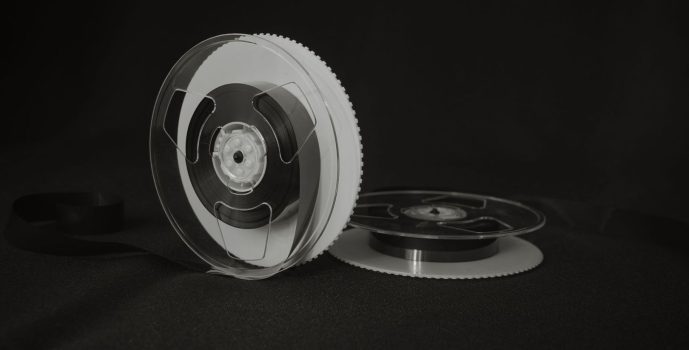
The mid-1950s 3D boom offered audiences a startling new relationship with the screen. Objects appeared to project toward the auditorium, landscapes acquired layered depth, and even an ordinary theatrical gesture could feel physically present. Yet much of that spectacle depended on a demanding arrangement: two separate 35mm film strips, one carrying the left-eye view and the other carrying the right-eye view, had to run in precise synchronization through the projection booth. Understanding the rapid evolution and technical parameters of the medium provides crucial context for its preservation, as chronicled in the history of 3D film.
Screening such material today requires considerably more than scanning two reels and placing them side by side. Historic elements may differ in shrinkage, framing, color, focus, perforation stability, and frame registration. A projectionist could compensate for some of these variations with booth adjustments, but mechanical correction was inherently limited and could introduce new instability. Modern restoration therefore treats each eye as both a photographic record and a geometric problem. High-resolution scanning, digital tracking, image warping, and carefully controlled convergence can recover the intended stereoscopic relationship while retaining film grain, texture, and the imperfections that testify to the original photochemical process.
The Anatomy of Dual-Strip Projection and Degradation
Dual-strip projection was conceptually direct but operationally exacting. Two synchronized projectors advanced separate prints at the same rate, with interlocks helping maintain frame-for-frame correspondence. The left and right images were then separated for the audience through polarized light, color filtering, or another period-appropriate viewing system. The arrangement demanded constant coordination among transport mechanisms, shutters, lenses, lamp houses, and synchronization controls. A small deviation could appear as a drifting horizon, a doubled object, or a distracting loss of depth.
The film itself also changes with age. Acetate-based stock can develop vinegar syndrome, a chemical deterioration that produces acetic odor, embrittlement, warping, and dimensional change. Left and right elements do not necessarily age at the same rate, particularly if they have experienced different storage conditions or have been printed on different stock. Preservation programs therefore require controlled handling and storage, consistent with the National Archives guidance on film-based media preservation and this Authoritative Source on motion-picture film. Before restoration begins, archivists inspect shrinkage, perforations, splices, warping, color fading, and frame damage across both eyes rather than treating either reel as an isolated object.
The consequences of even minor differences are unusually severe in stereoscopic cinema. The brain expects corresponding features in the two images to occupy compatible positions. If one eye sees a vertical edge slightly higher than the other, or if the images rotate by a fraction of a degree, the viewer must continually force the two pictures together. The result may be eyestrain, headache, nausea, or an unstable sense of depth. Common deterioration problems include:
- Unequal shrinkage, which alters frame size and registration between the two strips.
- Damaged or stretched perforations, which produce intermittent vertical movement.
- Warped film and uneven focus, which make corresponding details difficult to fuse.
- Color and density differences, which cause one eye to appear brighter or more strongly tinted.
- Missing, duplicated, or out-of-phase frames, which disrupt the temporal relationship between viewpoints.
Dissecting the Geometric Discrepancies
A restoration team begins by locating corresponding visual features in the left and right images. These may be architectural corners, faces, horizon lines, props, or points of light. The comparison reveals whether the problem is global, affecting an entire frame or reel, or local, confined to a shot, splice, damaged region, or moving subject. This distinction matters because a broad correction can stabilize a sequence, while a localized defect may require optical-flow analysis, masking, compositing, or manual intervention.
| Discrepancy | What it means on screen | Typical restoration response |
|---|---|---|
| Vertical parallax | A feature sits higher or lower in one eye, making fusion difficult. | Vertical alignment and local warping |
| Interaxial mismatch | The apparent distance between corresponding viewpoints varies incorrectly. | Depth adjustment, scaling, or convergence control |
| Rotational tilt | One image is subtly rotated relative to the other. | Global rotation followed by shot-level refinement |
| Color timing difference | One eye is brighter, darker, or differently balanced. | Eye-to-eye grading and density matching |
| Phase error | The strips are not temporally synchronized. | Frame alignment, replacement, or reconstruction |
Historical booths addressed these problems through projector alignment, lens adjustments, gate pressure, lamp balancing, and synchronization checks. Such measures could be effective when the prints were stable, but they could not correct a changing mismatch from shot to shot. A projectionist might align the opening image beautifully only to encounter vertical drift after a reel had warmed, or a problematic sequence whose original photography contained excessive interaxial separation. Digital rectification permits more granular control. It can establish a stable geometric relationship for each shot and, when necessary, vary the correction across individual frames.
That flexibility introduces a central curatorial question. The goal is not to make both eyes mathematically identical, because stereoscopy depends on their difference. The aim is to preserve the intended horizontal disparity while eliminating unintended vertical disparity, rotation, scale variation, ghosting, and distracting timing errors. A correction that appears technically elegant in a waveform or alignment display may still flatten the depth design or alter the rhythm of a visual gag. Every adjustment must therefore be judged on a screen, in motion, and in relation to the film”s dramatic composition.
Digital Reconstruction in the Modern Restoration Lab
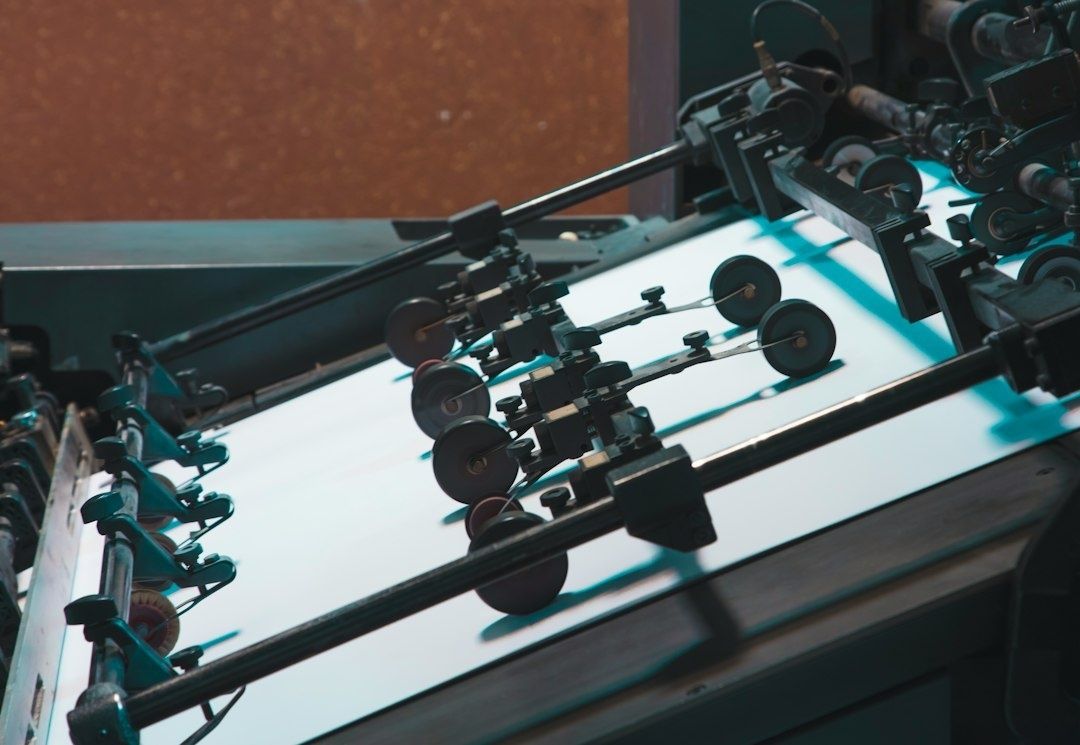
Separate eye-by-eye scanning is the foundation of the modern workflow. Each negative or print is captured independently at high resolution, often 4K or higher, using a transport system designed to minimize stress on fragile material. Sprocketless or digitally motor-driven mechanisms are valuable because they avoid relying on damaged perforations to position the film. Dedicated archival motion picture film scanners, such as the Lasergraphics ScanStation, DFT Scanity, or ARRISCAN, illustrate this principle by employing continuous, capstan-driven roller gates that protect fragile historical stock while handling full-length 1,000-to-2,000-foot theatrical reels at high resolution, with the specific hardware configuration chosen based on shrinkage levels, image area, archival standards, and required throughput.
Scanning is not restoration by itself. It creates two detailed records that must be measured, compared, and reconstructed as a stereoscopic pair. A lab typically combines automated analysis with human review, since a computer can identify edges and motion but may not understand whether a deliberate off-screen effect should remain prominent or whether a damaged detail is being mistaken for a legitimate depth cue. The sequence below describes the logic of the process:
- Inspect and stabilize the film elements, documenting shrinkage, damage, splices, density, and missing frames.
- Scan the left and right records separately at a resolution sufficient to preserve grain and fine image detail.
- Normalize orientation, scale, framing, color, and density so that corresponding images can be compared reliably.
- Track stable features through each shot, identifying vertical parallax, rotation, scale changes, phase errors, and local distortions.
- Apply geometric correction through transforms, optical-flow warping, depth-aware compositing, or carefully bounded manual work.
- Review the restored pair through the intended exhibition format, checking convergence, ghosting, comfort, and artistic depth.
Recent restorations of 1953 animated shorts and 1954 live-action features demonstrate why no single algorithm is sufficient. In Lumber Jack-Rabbit, the two perspectives had been manually drawn and contained severe mismatches. Optical-flow warping, compositing, depth-map reconstruction, and a 2.5D fallback were used to create a more coherent stereoscopic experience without pretending that the source had been photographed with modern precision. Popeye, the Ace of Space presented fewer retinal conflicts, but still required repairs for missing frames and an out-of-phase dust cycle.
The live-action restorations reveal a different balance of intervention. Phantom of the Rue Morgue retained strong original stereo, so the work focused on targeted issues such as a black slug, an out-of-phase leg, and halo artifacts. One wide street shot was deliberately left unchanged, an important reminder that restoration is not synonymous with total correction. The Bounty Hunter, which received its 3D world premiere in a 2026 restoration after previously existing only in a 2D release, required recovery of dark-scene detail as well as management of deep-shot occlusions and ghosting. In each case, scanning, grading, and convergence rendering served the same purpose: to make the historic stereoscopic design legible without erasing its material identity.
Balancing Spectator Comfort with Historical Authenticity
Archival ethics become especially visible in 3D restoration because technical defects are felt directly by the audience. Removing accidental vertical parallax is usually a preservation-minded intervention, while reducing deliberately exaggerated horizontal depth may change the film”s expressive character. The distinction is not always obvious. An effect that once thrilled audiences may now exceed the comfort limits of contemporary exhibition, especially when combined with unstable source elements, modern screen size, or a different polarization setup.
A responsible restoration documents its decisions and preserves access to the untreated material whenever possible. The restored version can correct damage and geometric instability, while production notes, comparison scans, and surviving prints retain evidence of the original state. This layered approach allows archivists and scholars to study historical flaws without requiring every public screening to reproduce the physical discomfort of a compromised booth. It also honors the principle that a restoration should preserve intent, not merely maximize technical cleanliness.
Festival presentation adds another dimension. A modern venue can evoke the period through polarized projection, appropriate framing, archival introductions, and notes about the original dual-strip process, while using digitally aligned files to protect the audience from avoidable fatigue. Projectionists should test convergence across the full program, inspect the screen for ghosting, confirm polarization efficiency, and monitor whether brightness or seating geometry affects image fusion. Helpful curatorial practices include:
- Provide clear audience guidance about glasses, seating, and the possibility of visual fatigue.
- Test the restored title in the actual auditorium rather than relying only on a laboratory monitor.
- Preserve period-appropriate depth and grain while correcting unstable eye-to-eye geometry.
- Explain significant interventions through program notes, talks, or restoration panels.
- Allow time between stereoscopic screenings so audiences can view the work attentively and comfortably.
The cultural value of this work extends beyond technical nostalgia. Restored 3D titles reveal how filmmakers, animators, designers, and exhibitors once imagined depth as a narrative tool. A hand reaching toward the camera, a figure emerging from a shadow, or a carefully staged corridor can be understood anew when the two images are brought into stable relation. Preservation festivals have increasingly made this connection visible, placing restored films within conversations about lost cinema, archival stewardship, and changing exhibition practice. The 2025 Restored and Rediscovered festival at the Jacob Burns Film Center, for example, combined restoration screenings, a 1950s 3D noir, live accompaniment, and discussions with preservation professionals, demonstrating how technical history becomes meaningful when shared with a contemporary public.
Experiencing Mid-Century Depth Through Modern Curatorial Craft
Dual-strip 3D restoration is a meeting point between photochemical history and digital precision. The original films depended on the physical separation of two viewpoints, mechanical synchronization, polarized projection, and the remarkable ability of audiences to fuse those images into a single spatial experience. Modern restoration does not need to imitate every limitation of that chain. By scanning each eye independently, measuring geometric discrepancies, correcting unintended conflicts, and grading the pair as a unified image, a restoration can recover the visual ambition that the original booth sometimes struggled to deliver.
Specialized festivals, archives, laboratories, and dedicated restoration teams are essential to keeping this heritage visible. Their work allows new audiences to encounter mid-century stereoscopy not as a novelty buried in technical legend, but as a sophisticated form of cinematic design. On a modern screen, the ideal experience is both historically alert and physically welcoming: the grain remains, the depth remains, and the illusion once built from two precarious strips can finally settle into focus.


