
Rethinking Spatial Cinema Beyond the Headache
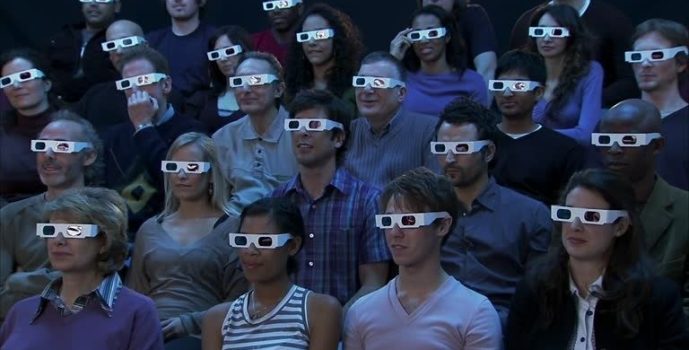
Modern 3D cinema carries a persistent paradox. It can produce an extraordinary sense of volume, proximity, and visual scale, yet the same illusion may leave viewers rubbing their eyes, losing concentration, or feeling nauseated before the final credits. For filmmakers and exhibitors, this is more than a comfort issue. When the audience becomes conscious of its eyes, glasses, or physical discomfort, the fictional world loses authority. Immersion turns into effort.
The pattern has appeared across several technological waves. The stereoscopic boom of the 1950s introduced audiences to spectacular depth, but crude alignment, uncomfortable viewing conditions, and aggressive effects often made the format feel like a novelty rather than a mature cinematic language. The revival of the 1980s repeated some of those errors, while the early digital era brought new opportunities alongside inconsistent conversion, projection, and display practices. The renewed industry enthusiasm around 2009 demonstrated that better cameras and digital workflows could improve the experience, but it also made clear that technological capability alone does not guarantee visual comfort.
The more productive question is not whether 3D is inherently tiring. It is whether the image has been designed with sufficient respect for human vision. This reframes comfort as an architectural discipline, often described through the idea of a depth budget. Every shot has a finite range of usable disparity, and every cut, camera move, and object placement spends part of that range. When the budget is managed with precision, depth becomes a controlled expressive resource rather than a continuous demand placed on the viewer”s eyes.
The Neurological Culprit Behind Vergence-Accommodation Conflict
In ordinary vision, depth emerges from several cues working together. Each eye receives a slightly different image, and the brain compares those images to calculate binocular disparity. At the same time, the eyes turn inward or outward toward an object, a movement called vergence, while the lenses change shape to focus at that object”s actual distance, a process called accommodation. In daily life, these responses are closely linked. If a person looks from a nearby book to a distant building, both the direction of the eyes and the focal setting change together.
A stereoscopic cinema screen disrupts that natural relationship. The audience”s lenses must accommodate to the physical screen, which remains at one fixed distance, while the eyes verge toward objects that appear either behind or in front of it. The brain can tolerate a moderate mismatch, particularly when the scene is stable and the disparity is well controlled. However, repeated or extreme mismatches can make fusion laborious. The viewer may experience eyestrain, blurred vision, headache, difficulty refocusing, or nausea. The underlying issue is not simply that the screen creates an illusion, but that the illusion asks the visual system to coordinate signals that would normally agree.
Clinical research provides useful evidence for treating this problem as a measurable physiological response rather than a matter of audience preference. A controlled study published in Frontiers in Human Neuroscience compared one hour of 3D and 2D movie viewing. The 3D condition was associated with a reduction in critical flicker fusion frequency, longer reaction times, and changes in activity around the right primary somatosensory cortex during visual tasks. The study was limited in scale, and its results should not be treated as a universal prediction for every viewer, but it demonstrates that visual fatigue can extend beyond a subjective report of discomfort.
For production and exhibition, the practical implications are clear:
- Disparity must remain fusible. If the left- and right-eye images differ too dramatically, the brain may struggle to combine them into one stable object.
- Depth changes require time. A cut that shifts the dominant depth plane abruptly can force the eyes to recalibrate before the audience has emotionally absorbed the new shot.
- Vertical errors are especially disruptive. Horizontal disparity can create intended depth, but vertical misalignment asks the eyes to compensate in a way that stereoscopic systems do not handle gracefully.
- Audience conditions matter. Screen size, viewing distance, brightness, glasses, projection alignment, and seat position all influence the final perceptual result.
Clinical literature cataloged through the National Center for Biotechnology Information further illustrates why artificial stereoscopy can produce ocular strain and neural fatigue when physiological cues are placed in conflict. For the creative team, this does not mean abandoning ambitious depth. It means treating the viewer”s visual system as a collaborator whose limits must be understood before the image can ask it to perform.
Deconstructing the Depth Budget
The depth budget is the working range within which a stereoscopic scene can communicate spatial relationships without demanding excessive visual effort. Its central reference is the zero parallax plane, usually aligned with the physical screen. Objects with zero parallax appear to sit on the screen surface. Objects with positive parallax appear behind the screen, while objects with negative parallax appear to project toward the audience. The terminology can vary between production teams, so the crucial point is to establish a consistent coordinate system and monitor it throughout capture, post-production, and exhibition.
Three variables determine how much apparent depth a shot creates. The interaxial distance, the separation between the two camera lenses, influences the strength of binocular disparity. Convergence or horizontal image translation determines where the scene”s principal depth plane is placed. Display conditions then transform those image relationships into a physical experience, because the same pixel disparity produces a different angular disparity on a small monitor than on a large cinema screen. The foundational stereoscopic principles outlined by Newcastle University”s stereoscopic guide remain valuable precisely because they connect camera geometry to audience comfort.
| Depth zone | Perceptual position | Creative opportunity | Primary risk |
|---|---|---|---|
| Negative parallax | In front of the screen | Direct address, threat, tactile immediacy | Excessive convergence, edge/window violations, eye strain, distracting spectacle |
| Zero parallax | At the screen plane | Stable visual anchor and comfortable transitions | Flatness if used without supporting depth cues |
| Positive parallax | Behind the screen | Atmosphere, scale, distance, spatial continuity | Overextended depth, difficult fusion, and excessive divergence if disparity exceeds interocular distance |
Screen size and viewing distance are not secondary technical details. They alter the angular relationship between the two images reaching the eyes. A disparity that appears modest on a production monitor may become aggressive when enlarged for a festival auditorium. Similarly, a shot comfortable from the center of a cinema may behave differently from an extreme side seat, where the viewer sees the projection geometry under less ideal conditions. Stereographers therefore need to evaluate material under representative exhibition conditions, not only through a small desktop preview.
The budget also includes depth continuity. A foreground object near the audience can be visually acceptable when the surrounding scene provides a stable reference, yet become uncomfortable if the next shot reverses the disparity direction or relocates the dominant plane without preparation. Digital rectification, color matching, geometric correction, and horizontal translation can repair some problems, but they cannot fully substitute for decisions made during capture. Baseline, lens choice, focus distance, convergence strategy, and the scale of the subject must be considered as an interconnected system.
Stereography as Storytelling Rather Than Spectacle
The most persuasive stereoscopic images do not announce their depth at every moment. They guide attention through a hierarchy of visual cues. Lighting can separate a face from a receding background. Blocking can place a character at a meaningful threshold between foreground and distance. Selective depth of field can support the intended point of attention, although excessive blur may also remove the spatial information that helps the brain interpret the scene. Production design, atmospheric perspective, texture, occlusion, and motion parallax all contribute to depth, allowing binocular disparity to remain expressive rather than doing all the work alone.
A depth budget becomes dramatically useful when it is tied to emotional structure. A restrained positive parallax may make an interior feel private, contemplative, or psychologically enclosed. A character placed close to the screen plane can appear available and immediate, while a figure held deeper in the image may feel isolated even when the framing is otherwise conventional. Negative parallax can create intimacy when a hand, face, or object gently approaches the audience, but it can also become aggressive if used as a reflexive punctuation mark. The question is not how far an object can come forward, but what its distance means.
- Establish a perceptual home. Give the audience a reliable depth plane early in a sequence, particularly after a title, transition, or major change of location.
- Protect the dominant subject. Keep the principal face or action within a comfortable range of disparity unless disorientation is deliberately central to the scene.
- Shape attention before adding depth. Use composition, contrast, movement, and blocking to direct the gaze, then let stereoscopy reinforce that decision.
- Prepare transitions. When a sequence moves from a shallow interior to a vast landscape, introduce intermediate shots or visual anchors instead of forcing an immediate ocular recalibration.
- Test the emotional result. Review scenes with viewers who understand the technology and viewers who do not. Technical success matters only if the audience remembers the character, space, or dramatic idea rather than the strain of viewing.
Editing is particularly important. A rapid alternation between radically different depth structures can feel like a series of visual jolts even when every individual shot is technically within tolerance. Cuts should be considered not only for action and rhythm, but also for the recovery time required by the eyes. Longer holds, motivated camera movement, and transitional compositions can allow the audience to settle into a new spatial arrangement. Conversely, a sudden violation of the established budget can be powerful when it represents panic, rupture, or altered consciousness, provided the effect is deliberate and carefully limited.
Emerging Technologies and the Horizon of Natural Vision
New display systems aim to reduce the conflict between where the eyes converge and where they focus. Light field displays attempt to reproduce a broader set of light rays, allowing different viewing positions to receive changing perspectives and, in more advanced implementations, more natural focus cues. Spatial imaging can use camera arrays, model-based capture, or multi-viewpoint systems to reconstruct how light travels through a scene rather than simply presenting one fixed image to each eye. The technology remains demanding because capture, processing, transmission, and display all require substantial resources.
- Light field and spatial displays seek to reproduce directional light information and support more natural parallax.
- Autostereoscopic systems remove the need for glasses, though viewing zones, resolution, and audience size remain important design challenges.
- Retinal and near-eye projection methods attempt to place imagery more directly within the viewer”s visual pathway, with comfort dependent on precise calibration.
- Computer vision tools can monitor disparity, detect geometric defects, track objects, and flag depth violations during production or post-production.
The transition away from heavy glasses is attractive because eyewear can restrict posture, reduce brightness, and add another source of fatigue. Yet glasses-free viewing is not automatically natural or comfortable. A display may eliminate the physical burden of eyewear while retaining unsuitable disparity, limited viewing zones, or unresolved accommodation conflicts. The most promising future therefore combines better capture with intelligent display adaptation. Real-time tools can assess the depth structure of a shot, compare it with the target screen, and alert artists before a problematic sequence reaches the audience.
Mastering the Craft of Effortless Immersion
True immersion is achieved when viewers stop thinking about the format. They do not notice the baseline, the convergence decision, the projection method, or the computational labor behind the image. They simply perceive a world with convincing spatial relationships and remain emotionally available to the story. That apparent effortlessness is not a lack of craft. It is the visible result of disciplined choices made across cinematography, post-production, exhibition, and audience testing.
The depth budget marks the meeting point between human biology and cinematic language. It recognizes that the eye is not a passive camera and that every apparent distance asks the nervous system to interpret, fuse, and prioritize information. Directors, stereographers, digital artists, and programmers can treat sensory comfort as an essential aesthetic choice rather than a concession. When depth is paced like editing, composed like light, and motivated like performance, immersive cinema gains something more valuable than spectacle. It gains trust, allowing audiences to enter the image fully and remain there.


