
The Stereoscopic Dilemma at Twenty-Four Frames
Twenty-four frames per second became cinema”s most influential temporal convention not because it represents a universal threshold for realism, but because it offered a practical balance between image continuity, photographic exposure, storage, and theatrical sound. Over decades, audiences learned to read its cadence as a cinematic signature. The slight cadence, the controlled motion smear, and the rhythm of successive images became part of the grammar of narrative film. In two dimensions, that grammar can be remarkably forgiving. In stereoscopic projection, however, the same economy can expose weaknesses that are barely noticeable on a flat screen.
The problem becomes especially visible when a camera pans laterally across a detailed environment or when an object crosses the frame at speed. At 24 frames per second, a traditional shutter angle may create a broad blur within each frame, while the image itself still jumps from one position to the next. In 3D, that jump is not merely a temporal disturbance. The left and right eye images must maintain a stable spatial relationship while the scene moves, and any mismatch can make edges appear to break apart, shimmer, or resist fusion. The result is often described as a taste dispute about the “look” of high frame rate cinema, yet the underlying issue is also physiological. As demonstrated in Drexel”s discussion of high frame rate detail retention, increasing temporal sampling can deliver more visual information over time, changing not only realism but the stability of motion and depth.
The Geometry of Judder and Lateral Disparity
Judder occurs when apparent motion is sampled too sparsely for the eye to interpret the intervening movement as continuous. A lateral pan makes the effect easy to diagnose: vertical lines, architectural edges, and fine textures seem to advance in discrete steps rather than glide. Stereoscopy adds a second requirement. Each moving feature must preserve an appropriate binocular disparity, meaning the horizontal difference between its left-eye and right-eye positions. If a feature shifts significantly between frames, the visual system receives two changing coordinates in each eye, and the intended depth relationship becomes unstable.
This is not simply a matter of blur being aesthetically pleasing or unpleasant. Motion blur records the path of an object during exposure, while temporal sampling determines how often that path is refreshed. A longer shutter exposure can soften the transition inside each frame, but it cannot create the missing positions between frames. In polarized projection, the two eye views are delivered through separate polarization states and reconstructed by passive glasses. When a high-contrast edge moves across the screen, the viewer must fuse the corresponding edge in both channels while also interpreting its changing location. A strobing update can compete with the smooth pursuit movements of the eyes, which naturally attempt to follow the moving feature continuously.
The comparison below illustrates why high frame rate is more than a numerical upgrade. The frame interval is the duration available before the next discrete image arrives. At 24 frames per second, that interval is approximately 41.7 milliseconds. At 60 frames per second it falls to approximately 16.7 milliseconds, while 120 frames per second reduces it to approximately 8.3 milliseconds. These values do not guarantee comfort by themselves, because synchronization, crosstalk, brightness, shutter design, and content motion remain crucial. They do, however, give the visual system more frequent positional information.
| Presentation rate | Approximate frame interval | Typical perceptual implication |
|---|---|---|
| 24 fps | 41.7 ms | Strong cinematic cadence, greater risk of judder during fast pans |
| 48 fps | 20.8 ms | Reduced stepping, with motion still retaining a recognizable filmic texture |
| 60 fps | 16.7 ms | More stable movement and improved clarity for rapid action |
| 120 fps | 8.3 ms | Highly frequent updates, particularly valuable for demanding stereoscopic motion |
The practical significance of this progression was visible in the technical ambitions surrounding 4K, stereoscopic presentation, and 120 frames per second. Higher frame rates preserve more detail during movement, as the Drexel analysis of Ang Lee”s high frame rate approach explains, although the increased information can initially feel unusually exposed. For curators, that response is important. A presentation may reveal production design, makeup, or artificial surfaces with exceptional clarity, but the same presentation can make a rapidly moving stereoscopic edge far more coherent. The question is therefore not whether high frame rate is inherently “cinematic,” but whether the temporal standard serves the material and the audience”s visual task.
Neurological Fatigue and the Accommodation-Vergence Conflict
Stereoscopic viewing places the visual system in an unusual arrangement. Accommodation, the adjustment of the eye”s lens for focus, remains tied to the physical screen plane. Vergence, the inward or outward rotation of the eyes, responds to the apparent depth created by disparity between the two images. In ordinary viewing, these cues generally point toward the same distance. In 3D cinema, the eyes may converge on an object that appears in front of or behind the screen while the lenses remain focused on the screen surface. This accommodation-vergence conflict is not automatically harmful, but it can become tiring when exaggerated, sustained, or combined with unstable motion.
At 24 frames per second, a moving stereoscopic edge can intensify that conflict. The eyes may begin a smooth pursuit movement, receive a new image at a discrete and displaced position, and then make a small corrective movement to reacquire the feature. Repeated across high-contrast edges, these corrections can become perceptually expensive. It would be inaccurate to claim that every micro-saccade is caused by low frame rate, or that a higher frame rate eliminates all discomfort. Brightness fluctuations, binocular crosstalk, excessive parallax, screen size, viewing distance, and individual sensitivity all contribute. Still, reducing the interval between updates can make the apparent trajectory more stable and reduce the scale of each positional correction.
Clinical literature on stereoscopic displays is commonly indexed through biomedical databases, including the available research record on visual discomfort and conflicting depth cues. Because the supplied record does not expose the article”s full findings, it should not be used to assign a precise universal fatigue threshold. The robust engineering principle is more modest and more useful: temporal instability magnifies the burden created by conflicting sensory cues, while a frame interval below fifteen milliseconds, as achieved by presentations above roughly 67 frames per second, can materially reduce the distance between successive image updates.
- More frequent updates reduce the apparent positional leap of a moving object.
- Cleaner binocular correspondence helps the visual system maintain the relationship between left-eye and right-eye edges.
- Shorter exposure and controlled blur can preserve detail without turning every movement into a brittle, hyper-sharp event.
- Moderate depth placement remains essential, because high frame rate cannot repair excessive parallax or poor stereo alignment.
The physiological argument should not be mistaken for a demand that every film run at 120 frames per second. A quiet dialogue scene with restrained camera movement may gain little from the highest available cadence, while a fast lateral move through a detailed landscape can benefit immediately. High frame rate is best understood as additional perceptual headroom. It gives the stereographer and cinematographer more room to place depth, movement, and texture without asking the audience to resolve several competing changes at once.
Curatorial Precision and the Mechanics of Exhibition
High frame rate stereoscopy is also a distribution and exhibition discipline. A theatrical master must move through a chain that includes image encoding, packaging, encryption, transport, storage, media-server playback, projector synchronization, and quality assurance. SMPTE”s digital cinema format describes this ecosystem through distribution masters, compositions, and Digital Cinema Packages, with standards covering packaging, operations, synchronization, projector performance, color, audio, and metadata. For festival programmers, this means that a frame-rate label is only the beginning. The playback chain must be verified as a complete system.
Modern media servers are designed to manage demanding files, but capacity and throughput still require deliberate planning. The GDC SR-1000, for example, supports SMPTE and Interop DCP playback at bit rates up to 500 Mbps and includes storage and cache functions intended to support high-frame-rate and high-dynamic-range content. Such specifications do not guarantee a successful screening in every auditorium. A festival should confirm the delivered DCP version, test ingest and playback, verify the projector”s supported frame rate, and inspect left-right synchronization, luminance, crosstalk, and audio timing before the public presentation.
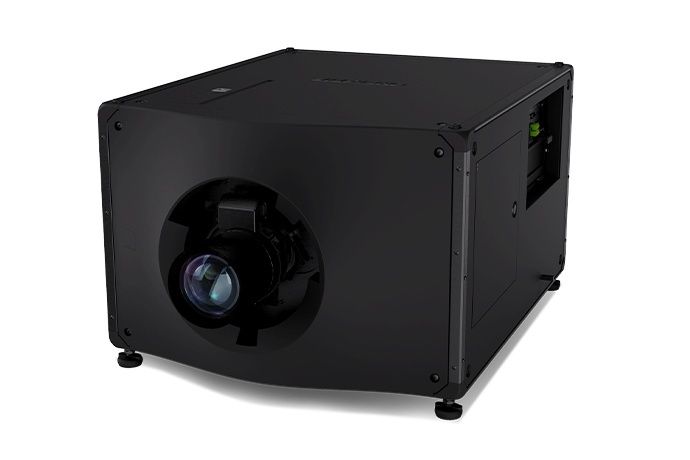
Projection architecture matters as much as file architecture. Dual-head systems can dedicate one optical path to each eye, while pure laser illumination can provide stable brightness without the modulation and maintenance profile associated with older lamp systems. The Christie Mirage SST-6P, now discontinued and whose listed support concluded on June 12, 2026, illustrates the capabilities that advanced systems have made possible: dual heads, 4K stereoscopic playback at up to 120 frames per second per eye, and high-output RGB laser illumination. It should be treated as a historical and technical reference rather than a currently available product recommendation. Current equipment choices must be confirmed directly with manufacturers and integrators.
- Inspect the master by confirming resolution, eye order, frame rate, shutter assumptions, audio configuration, and subtitle behavior.
- Test the complete playback path from server through projector, screen, glasses, and auditorium seating positions.
- Evaluate motion rather than still frames, using pans, diagonals, foreground crossings, and depth transitions that expose judder or crosstalk.
- Document audience-facing conditions, including brightness, viewing distance, glasses cleanliness, screen gain, and any seats with compromised stereo alignment.
Curatorial control can also extend into the temporal design of the film itself. Variable frame rates or selective temporal exposure may allow a production to preserve a heightened, tactile cadence in dramatic scenes while deploying greater temporal density during action, complex camera movement, or effects work. The transition must be intentional. Abrupt changes can become a new form of distraction, whereas carefully motivated shifts may distinguish memory, performance, physical immediacy, or altered perception. The artistic opportunity lies in treating frame rate as part of mise-en-scène, alongside lens choice, lighting, color, and spatial composition.
Embracing Temporal Resolution as a New Visual Language
High frame rate projection deserves to be evaluated as a clarity tool for spatial storytelling, not as a clinical novelty or a threat to cinematic identity. Twenty-four frames per second remains a powerful expressive convention, particularly when its cadence and blur are deliberately integrated into the image design. Yet stereoscopic motion asks more of the viewer than flat-screen motion does. When depth, lateral movement, fine detail, and binocular fusion arrive together, insufficient temporal resolution can turn visual poetry into physical effort.
Festivals, cinematographers, stereographers, and projectionists now have the opportunity to define temporal standards with the same care traditionally given to aspect ratio, color grading, and sound format. The most persuasive future will not replace one universal cadence with another. It will match frame rate, shutter behavior, depth budget, display technology, and narrative intention. Mastering motion blur remains essential, but mastering the timing of the image is equally important. When that timing is precise, audiences can experience stereoscopic depth with greater stability, preserve the emotional texture of cinematic movement, and leave the theater remembering the world on screen rather than the strain required to see it.


